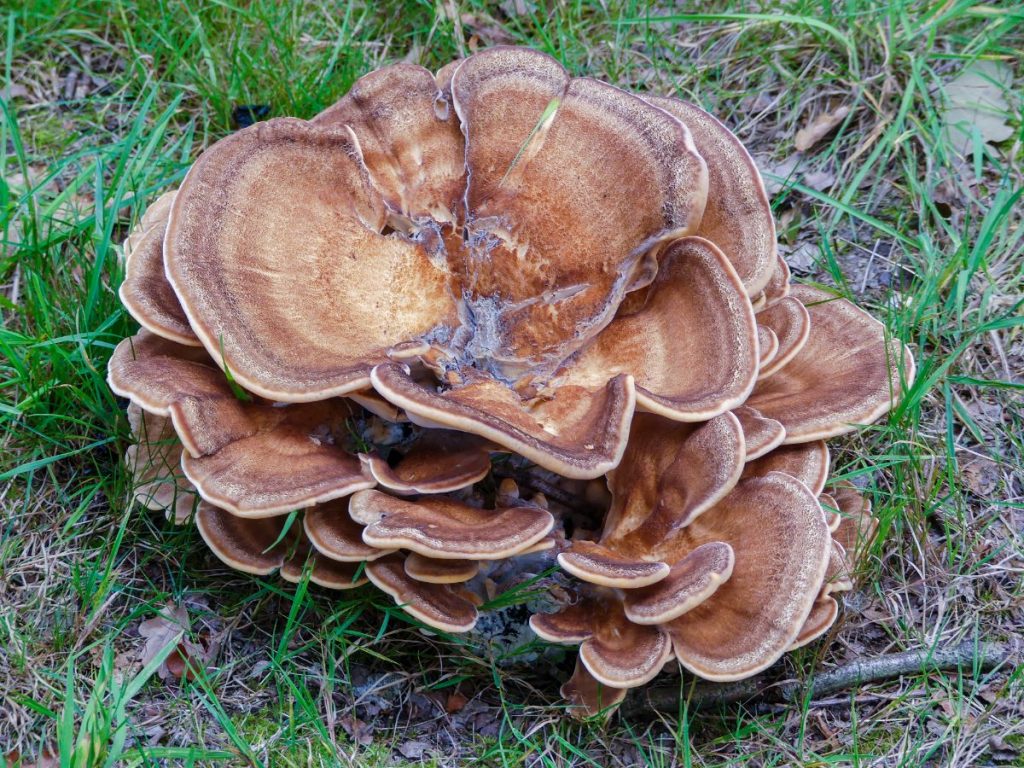
Most people start mushroom growing with oysters or lion’s mane. They grow fast, they’re forgiving, and you can get a harvest pretty quickly. But if you talk to growers who’ve been doing this for a while, a lot of them will tell you the same thing: the first time you successfully grow Hen of the Woods (Maitake), it feels like a real achievement.
And honestly, I completely agree with that.
When maitake starts forming, it doesn’t even look like a typical mushroom. Instead of a single cap, you get these layered clusters that almost look like feathers or coral growing out of the substrate. It’s one of those mushrooms that makes you stop and stare for a second.
Then you cook it… and that’s when things get really interesting.
The flavor is deep, earthy, and packed with umami. In my opinion, maitake cooked in butter beats most mushrooms you’ll find in a restaurant. It’s that good.
At MushroomGroov, we’ve worked with a lot of mushroom species. Maitake is one that growers keep coming back to. It takes a little patience, but once you grow it successfully, you’ll probably want to do it again.
So let’s walk through how to grow Hen of the Woods mushrooms at home.
Why Hen of the Woods Is Such a Popular Mushroom
Hen of the Woods—scientifically known as Grifola frondosa—naturally grows at the base of hardwood trees like oak and maple. In the wild, it usually appears in late summer or early fall and can grow into huge clusters weighing several pounds.
But appearance isn’t the only reason people love this mushroom.
First, there’s the flavor. Maitake has a rich, savory taste that works in everything from stir-fries to pasta. Chefs love it because it keeps its texture when cooked.
There’s also the nutrition factor. Maitake contains compounds called beta-glucans, which researchers have studied for their potential immune-supporting properties.
And from a grower’s perspective, there’s another reason: value.
Hen of the Woods mushrooms often sell for higher prices than common varieties because they’re harder to cultivate. Restaurants and specialty markets are always interested in high-quality maitake.
That means growing them isn’t just fun—it can actually be profitable if you get good at it.
Understanding the Environment Maitake Needs
Before you start growing maitake, it helps to think about where it grows naturally.
These mushrooms evolved in forests. They grow on hardwood and prefer cooler temperatures.
That tells us a lot about how to grow them indoors.
Here are the basic conditions that work best: